

Top 10 Questions to Ask Before Choosing a Therapist
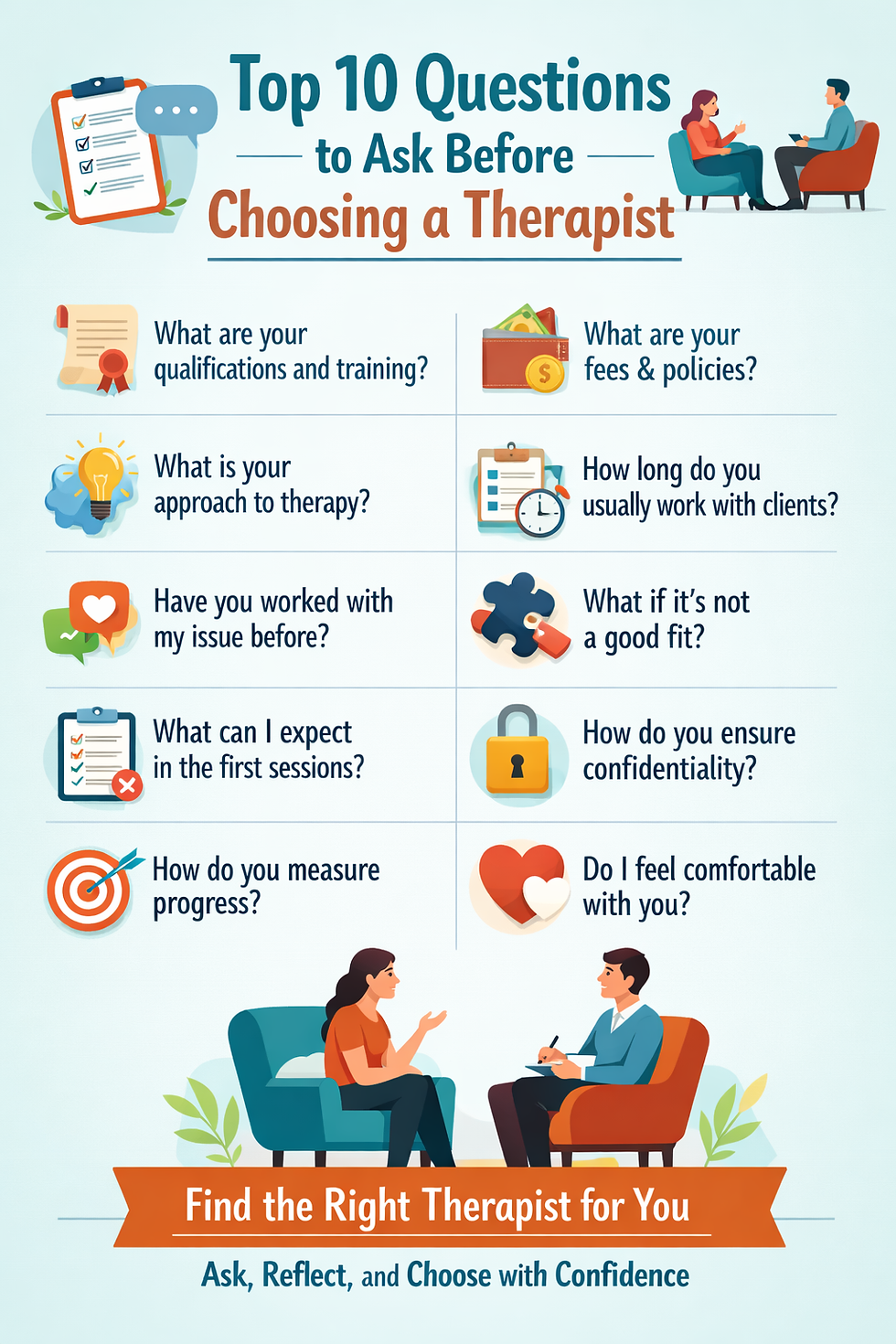
Choosing a therapist can feel overwhelming. You’re not just booking a service — you’re inviting someone into your inner world. The right therapist can help you untangle years of confusion, pain, or self-doubt. The wrong one can leave you feeling misunderstood or discouraged.
Therapy is deeply personal. And just like you wouldn’t choose a doctor without asking questions, you shouldn’t choose a therapist without understanding whether they’re the right fit for you.
Here are the top 10 questions to ask before choosing a therapist — and why they matter.
1. What Are Your Qualifications and Training?
Not all therapists are the same. Some are clinical psychologists, some are counselors, some are psychiatrists, and some are licensed social workers. Each has a different training background.
Ask about:
Their degree and certifications
Years of experience
Whether they are licensed in your region
You’re not being rude — you’re being responsible. You deserve to know the credentials of someone you’re trusting with your mental health.
2. What Is Your Approach to Therapy?
Therapists use different methods. Some focus on structured, practical tools. Others explore emotions and past experiences. Some are solution-focused, while others take a deeper, long-term approach.
Common approaches include:
Cognitive Behavioral Therapy (CBT)
Psychodynamic therapy
Humanistic therapy
Trauma-informed therapy
Ask them how they typically work and what sessions usually look like. You should feel comfortable with their style.
3. Have You Worked with Clients Facing Similar Issues?
If you’re dealing with anxiety, burnout, relationship issues, trauma, or depression, it helps to know whether they have experience in that area.
You can ask:
“Have you worked with clients who struggle with similar concerns?”
This doesn’t mean they must specialize only in your issue, but familiarity often brings deeper insight.
4. What Can I Expect in the First Few Sessions?
Starting therapy can feel intimidating. Understanding the process helps reduce anxiety.
Ask:
Will the first session be mostly assessment?
Will there be homework?
How do you set goals?
Clarity reduces fear. And therapy works best when you know what you’re stepping into.
5. How Do You Measure Progress?
Therapy isn’t magic — it’s a process. Progress might look like:
Improved emotional regulation
Better communication skills
Reduced anxiety episodes
Healthier thought patterns
Ask how they track improvement. Some therapists use structured goal setting, while others focus on reflective progress.
6. What Are Your Session Fees and Cancellation Policies?
This may feel awkward, but it’s important.
Ask about:
Cost per session
Payment methods
Cancellation policies
Package discounts (if available)
Financial clarity avoids stress later. Therapy should support your mental health — not create financial anxiety.
7. How Long Do You Typically Work with Clients?
Some therapists work short-term (8–12 sessions). Others take a long-term, open-ended approach.
There’s no “right” answer — but their philosophy should match your expectations. If you want structured, time-bound therapy, make sure they offer that.
8. What Happens If I Feel It’s Not a Good Fit?
Therapy is a relationship. And sometimes, the chemistry just isn’t right.
Ask:
“If I feel we’re not the right fit, how do you usually handle that?”
A professional therapist will never take this personally. In fact, they may even help refer you to someone better suited.
Feeling safe enough to ask this question is a good sign in itself.
9. How Do You Maintain Confidentiality?
Your privacy matters. Ask how they:
Protect client information
Store session notes
Handle emergency situations
Understanding boundaries builds trust — and trust is the foundation of effective therapy.
10. Do I Feel Comfortable Talking to This Person?
This last one is less logical and more emotional — but it’s just as important.
After your first conversation, ask yourself:
Did I feel heard?
Did I feel judged?
Did I feel safe opening up?
Credentials matter. Techniques matter. But comfort and trust matter most.
If something feels off, it probably is.
A Final Thought
Choosing a therapist isn’t about finding the “best” one. It’s about finding the right one for you.
It’s okay to:
Ask questions
Take your time
Try more than one therapist
Change therapists if needed
Therapy is an investment in yourself. And you deserve someone who respects your vulnerability, understands your needs, and supports your growth.
The right therapist won’t just help you manage problems — they’ll help you understand yourself better.
And that journey is worth choosing carefully.


Comments